Your whole house, known.
Where to turn off the water, what is due this season and what the last plumber did, in one manual for your house.
Tap a part of the home.


Keeping up with it
A checklist for each season
Tasks for your house and climate, ticked as you go.
See how it works ↓The manual itself
A manual drawn for your house.
- Floor plans and a yard plan. Upload a floor plan; lay out the yard by describing it, walking it or measuring it.
- The house’s history. Work on the house by year, as you record it.
- In English or Spanish. The manual, the web app and the monthly update.
A year with your manual
Week one · Getting it all in
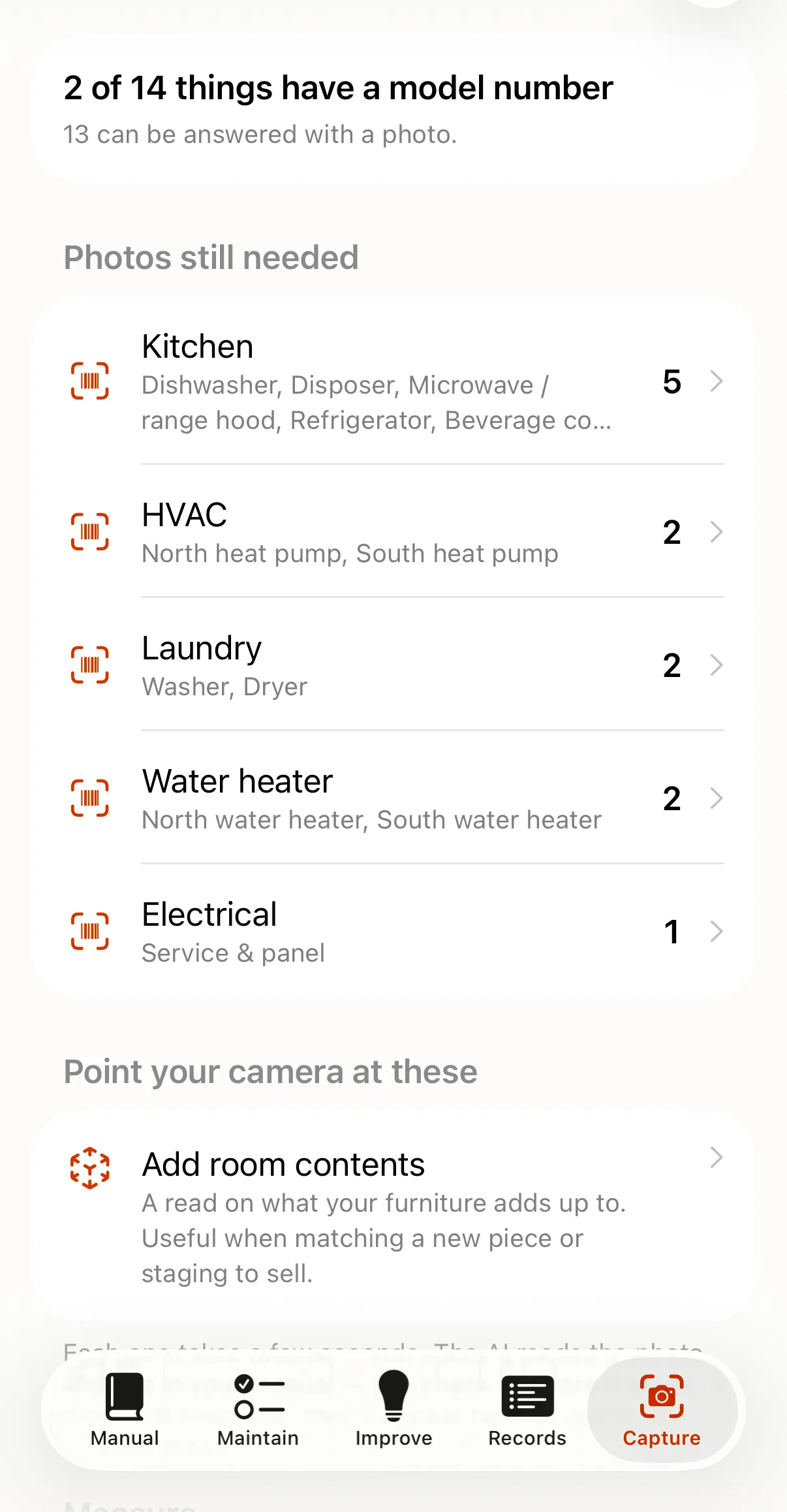
Add a document. It reads the rest.
- Nameplates, from a photo. Make, model and serial, read off the label.
- Tell it what happened. “The plumber came Tuesday” goes into your ledger.
- Ask it anything. Answers from your own record and documents.
- Nothing kept without your review. You check what it found before anything is saved.

The first season · Keeping up with it
The right chore, in the right season.
- What is aging, and when to plan for it. Each system placed on its expected life.
- This week. The forecast beside the house’s own dates.
- Upkeep in your own calendar. A private link your calendar app follows: each season’s jobs, and the frost jobs on their day.

The first thing that breaks · When something goes wrong
Know what to do, before you need to.
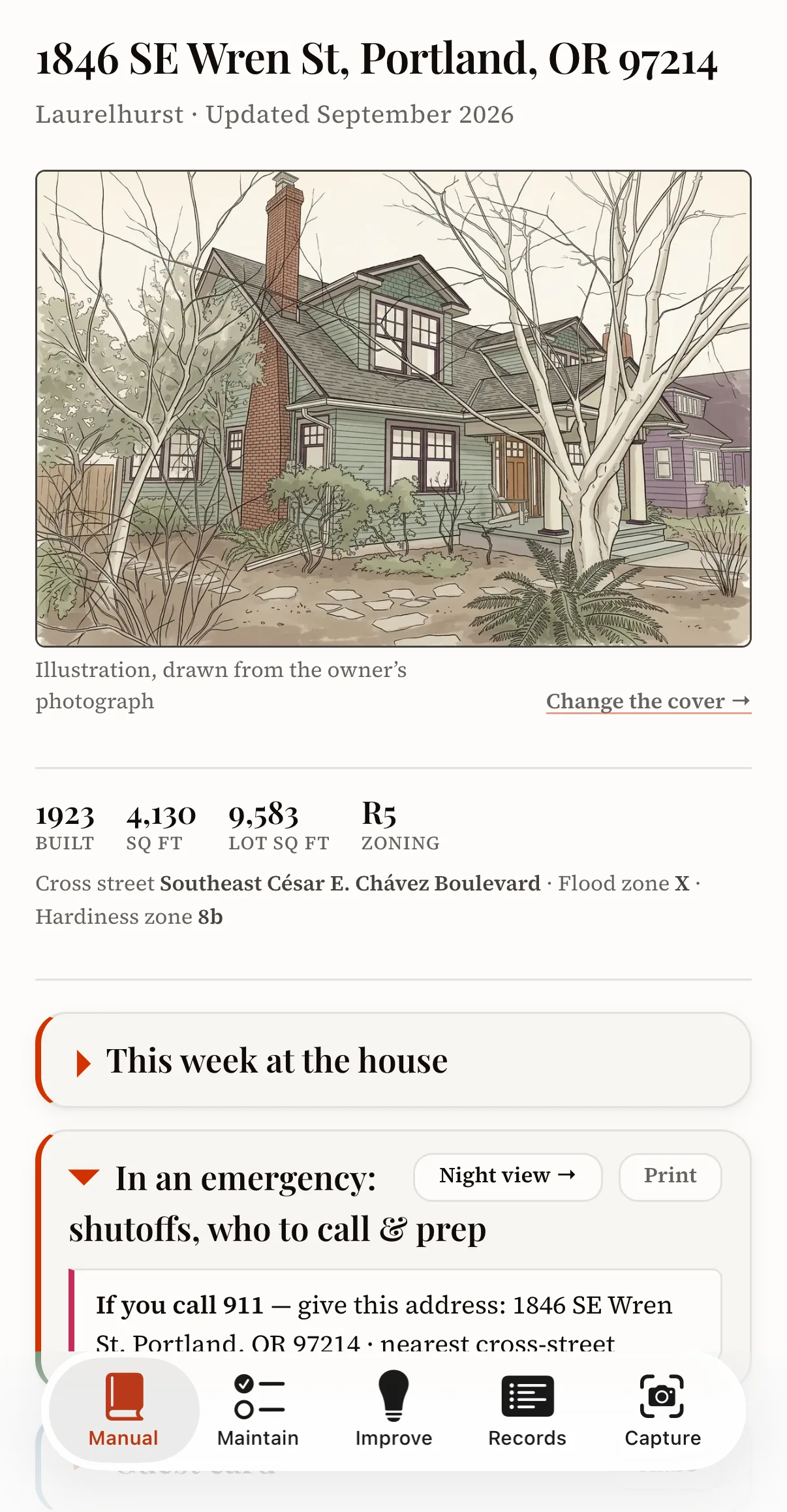
- What to tell 911. Your address and the nearest cross street.
- What to check, by what is happening. Water leaks and power outages, plus your home’s own risks.
- A night view, and a printed copy. A dark view for outages, a copy for the fridge.
- If you file a claim. A packet: what you had, the policy, the day’s weather.

In an emergency: shutoffs, who to call & prep
If you call 911 — give this address: 128 Larkspur Court, Middlebury, VT 05753 · nearest cross-street Quarry Rd
Shut it off
Call
Prep & plan
If you smell gas
- A rotten-egg smell or a hissing sound: get everyone out now, on foot. On the way, don’t use a phone or any switch, don’t light anything and don’t start a car. Don’t look for the leak.
- Once you are well away from the leak, call 911 and the gas company. Never assume someone else has. Don’t go back in or try to fix anything.
Carbon monoxide
- A CO alarm, or headaches, dizziness or nausea indoors: get everyone outside into fresh air, then call 911 from there
- Run a generator outdoors only, at least 20 feet from doors, windows and vents, and never in a garage, even with the door open.
- Fuel-burning equipment on your ledger, which can give off odorless carbon monoxide: oil heat, a gas range, a wood fireplace or stove, a generator.
If water gets in
- Get to higher ground, and leave early if told to. Never walk or drive into moving water: even a shallow-looking current can carry off a car. Indoors, don't touch the breaker panel or anything electrical while standing in water; cut the power only from somewhere dry.
If water is leaking
- Close the main water shut-off, then turn off the water heater and close the valve on its cold-water inlet.
- If water has reached outlets, appliances or the breaker panel, don’t touch anything electrical while it’s wet or you’re standing in water. Turn the power off only from somewhere dry.
On the card: Water
If the power goes out
- Your heat is oil-fired, and the burner, its pump and the controls all need electricity. No power means no heat, even with oil in the tank.
- Your water comes from a well, and the well pump runs on electricity. With the power out, the taps stop once the pressure tank runs down.
The first project · Planning a project
Know the project before the quote.
- Check a quote. It points out what a quote leaves out, and compares two to four.
- A request for prices. One description to send to several contractors.

The first time you’re away · Sharing it, and keeping it
Share what they need. Nothing more.
- A guest view. Just what a sitter or guest needs.
- A co-owner. Their own sign-in, and your plan covers them.
- Hand it to the next owner. When you sell, one link makes it theirs, history and all.
- Private by default. Nothing is visible until you share it. We don’t sell your data. See our privacy policy.
